Should the U.S. have rejoined the UN Human Rights Council?
Should the U.S. have rejoined the UN Human Rights Council?
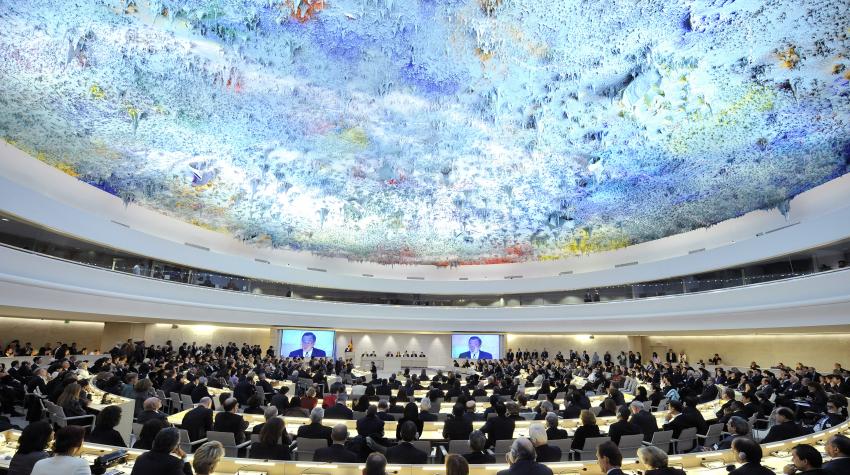
In October of 2021, The United States rejoined the UN Human Rights council three years after former President Trump and his administration pulled out. For many, the UN Human Rights Council has been an opportunity for countries who have abused human rights in their countries to serve on and be elected to. The council has had serious flaws– flaws criticized by former Presidents Bush and Obama. However, Biden and his administration argue that rejoining the UN Human Rights Council will be an opportunity to maintain the United States’ global presence and offer reform to the council. While I wished to stay hopeful in our current administration’s ability to reform the UN Human Rights council, I’m weary due to the historical context of the UNHRC and the ways it has fallen short on fulfilling its promise on protecting human rights.
The UNHRC was created in 2006 in response to the previous UN Human Rights commission. As part of a general UN reform effort, the UNHRC was created due to the criticism the UN Human rights commission received in its inadequacy in acknowledging and addressing human rights abuses and having member states that have been human rights abusers. The main criticism of the UN Human Rights commission was that it consisted of people who were “murdered and rapists” that joined through membership not to protect human rights, but rather to protect themselves from criticism from their human rights violations. But was the UNHRC more effective than its predecessor?
Essentially, the UNHRC developed reform in the membership rules. One example of a change was the fact that now, the HRC’s members were chosen by all 193 UN member states at the time instead of of the fifty-four numbers that made up the ECOSOC. However what isn’t clear is whether or not these rules changes were effective in actually being a “better jury” with human rights violations compared to the previous Human Rights Commission. Chilton and Golan-Vilella (2016) found that while the human rights record of the HRC’s members were better on average than compared to the Human Rights commission, the actual members themselves still have a worse human rights record than a UN member who wasn’t elected to the council.
When it comes to the human rights violators on the Council, they have traditionally stayed silent in condemning them. The HRC has lacked in adopting resolutions that call out the human rights abuses by China, Cuba, Russia, etc. and this was when the U.S. was on the council. For example, while at least one million Muslim Uyghurs were forced into concentration camps in the People’s Republic of China’s Western province of Xinjiang, China still holds a seat on the UNHRC. In 2021 when in Russia, over 5,000 protestors were arrested for condemning the detention of a Putin critic, Russia still held a seat in UNHRC. There needs to be greater accountability of HRC members, but clearly it’s not something we see coming to fruition. Can the U.S. really make reform within the Council where we can stick to the UN’s goal of protecting human rights?
We will be able to see if the U.S. will actually lead reform efforts. If we do, it will have to be aggressive. But the U.S. needs to lay out an agenda for the type of change it wishes to see in the Council. If no reform or complete abolishment and recreation doesn’t occur, the UN will continue to fail those who need it. Perhaps the inequities present in the HRC are a deeper problem that deals with the inadequacies of the UN as a whole and in other councils Sam touches on. Only time will tell.
You post really highlights not only a major flaw in the UN Human Rights council but many international organizations as a whole. In this case how could a human rights council with members who commit human rights actively possible be effective. It seems incredibly backwards and just represents many of the weaknesses of organization like the UN where in many cases they simply do not act, and are instead more ceremonial. But when humans rights issues actually need to be addressed they just sit back and do not help fix the problem, it is a major issues.
ReplyDeleteThank you for your reply! Yeah, it's pretty complicated when we think about it. If the U.S. wants to be involved with human rights in the world, there needs to be another alternative or option that would still benefit us, but I'm not sure if any of that exists right now. Maybe the U.S. could provide some reform, but I'm just not sure how likely it would be given the long history of hypocrisy on the UNHRC.
DeleteI really enjoyed reading your blog post. I think it is super interesting how you argue against the US being a part of the UN Human Rights council. From your post it is clear that even though the council stands to bring social justice on a global scale many of the members of it have not been punished for their own human rights violations. You say that the US must be aggressive and clear to promote this change, yet do you think the US is powerful enough to make changes in this council where so many of the members do not stand to truly protect human rights but just themselves?
ReplyDeleteI do think to an extent the US is powerful enough to at least propose changes to the council. However, I think it's also a matter of whether other countries would listen to the United States when the US has abused and betrayed human rights in the past (and even today). I'm interested in seeing if the current administration will end up doing much with the UNHRC or if other issues will sort of bury this under.
Delete